0
$0.00
Mini Cart
Empty cart
No products in the cart.

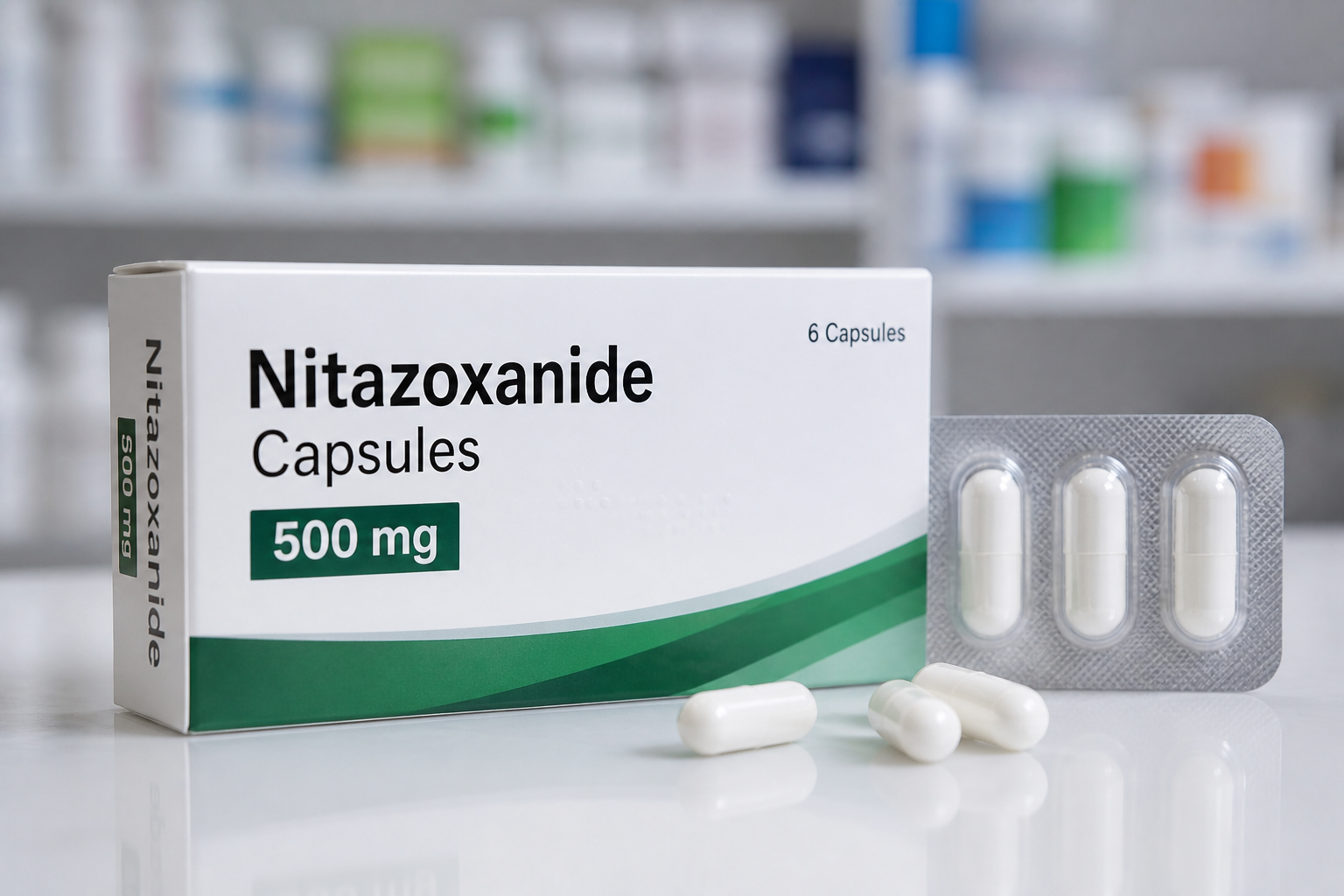
If you’ve recently been diagnosed with a parasitic infection like giardiasis or cryptosporidiosis, you’re probably experiencing some pretty unpleasant symptoms—persistent diarrhea, abdominal cramping, nausea, and general malaise. These infections can significantly impact your quality of life, making even simple daily activities uncomfortable. The good news? There’s an effective treatment available: nitazoxanide capsules.
Nitazoxanide is a trusted antiparasitic medication widely prescribed across the United States for treating certain intestinal infections. If you’ve been prescribed this medication or are considering it as a treatment option, this guide will help you understand what it is, how it works, and what to expect.
Parasitic infections might sound exotic or rare, but they’re actually more common in the United States than many people realize. You can contract parasites through contaminated water, undercooked food, poor sanitation, or even travel to areas with higher infection rates. Giardia, for example, is often called “traveler’s diarrhea” because it’s frequently picked up while traveling internationally, but it can also be contracted domestically from contaminated water sources.
The problem with parasitic infections is that they don’t typically go away on their own. Your immune system can’t effectively eliminate these organisms without help. That’s where nitazoxanide comes in—it provides the targeted treatment your body needs to clear the infection.
Nitazoxanide is an antiparasitic and antiviral medication that’s been approved by the FDA for treating specific intestinal infections. It’s available in capsule form, making it convenient and easy to take. The medication works through a unique mechanism that targets the parasites directly, stopping them from reproducing and eventually eliminating them from your system.
In the United States, nitazoxanide is FDA-approved for treating:
Healthcare providers may also prescribe nitazoxanide off-label for other parasitic or certain viral infections under specific circumstances and medical supervision.
Understanding how nitazoxanide works helps explain why it’s so effective. The medication doesn’t just mask symptoms—it actually eliminates the parasites causing your infection.
Nitazoxanide works by:
This broad-spectrum action makes nitazoxanide effective against multiple types of intestinal parasites, which is why it’s such a valuable treatment option.
Unlike some medications that target only one specific parasite, nitazoxanide is effective against a range of protozoal infections. This makes it a versatile treatment option that healthcare providers can confidently prescribe for various parasitic infections.
One of the most appreciated benefits of nitazoxanide is how quickly it works. Many patients notice improvement in their symptoms within just a few days of starting treatment. The diarrhea decreases, the abdominal cramping eases, and you start feeling like yourself again. This rapid relief is particularly important because parasitic infections can be debilitating and significantly impact your ability to work, socialize, and enjoy life.
Nitazoxanide is typically prescribed for a short course—usually just 3 days for most infections. This short treatment window improves compliance because you’re not dealing with a long-term medication regimen. You take the medication for a few days, and the infection is cleared. This is much more manageable than some other treatment options that require weeks of medication.
Compared to some other antiparasitic medications, nitazoxanide is generally well-tolerated. Most people experience minimal side effects, and the side effects that do occur are typically mild and temporary. This makes it a safer option for most patients, including children.
Healthcare providers across the U.S. prescribe nitazoxanide for:
Proper dosing is crucial for effective treatment. Dosage varies based on your age, weight, and the specific infection being treated, but here are general guidelines:
Never self-adjust your dosage or stop taking the medication without consulting your healthcare provider. Stopping treatment prematurely could allow the infection to persist or return.
Nitazoxanide is generally well-tolerated, but like all medications, it can cause side effects in some people. Most side effects are mild and temporary:
Most side effects are mild and resolve on their own. However, if you experience persistent or severe symptoms, contact your healthcare provider immediately. Serious side effects are rare but should be reported right away.
While nitazoxanide is safe for most people, certain individuals should consult their healthcare provider before taking it:
A proper evaluation by your healthcare provider ensures that nitazoxanide is safe and appropriate for your specific situation.
While individual responses vary, here’s what many patients experience:
Once you’ve recovered from a parasitic infection, you’ll want to prevent it from happening again:
Nitazoxanide capsules are a proven, effective treatment for parasitic infections like giardiasis and cryptosporidiosis. With proper medical guidance and adherence to your prescription, you can expect rapid symptom relief and complete recovery. If you’ve been diagnosed with a parasitic infection, talk to your healthcare provider about whether nitazoxanide is the right treatment option for you. Most people find it to be an effective solution that gets them back to feeling healthy and normal quickly.
Nitazoxanide treats parasitic infections like giardiasis and cryptosporidiosis. It works by disrupting parasite metabolism, stopping their growth and allowing your body to eliminate them naturally. Healthcare providers may also prescribe it off-label for other parasitic infections under medical supervision.
Yes, nitazoxanide is available by prescription throughout the United States. You cannot purchase it over-the-counter. Your healthcare provider evaluates your symptoms, confirms the infection through testing, and prescribes nitazoxanide if appropriate. Once you have a valid prescription, you can fill it at any pharmacy.
Most parasitic infections are treated with a short 3-day course of nitazoxanide. This short duration improves medication compliance. Many patients notice symptom improvement within the first few days, with complete resolution typically occurring within a week of finishing treatment. Your healthcare provider may adjust the duration based on your specific infection.
Yes, nitazoxanide can be safely prescribed for children under medical supervision. Dosage is adjusted based on age and weight. Pediatricians commonly prescribe it for childhood parasitic infections because it’s well-tolerated with minimal side effects. Always use exactly as prescribed and report any unusual symptoms.
Yes, nitazoxanide requires a prescription from a licensed healthcare provider. Your doctor evaluates your symptoms, confirms the parasitic infection through testing, and determines if nitazoxanide is appropriate before prescribing it.
Nitazoxanide is well-tolerated with minimal side effects. Common mild effects include nausea (reduced by taking with food), headache, and temporary urine discoloration. These typically resolve on their own. Serious side effects are rare. Contact your healthcare provider if symptoms persist or worsen.
The FDA does not review any compounded drugs to evaluate their safety, effectiveness, or quality before they reach patients.