0
$0.00
Mini Cart
Empty cart
No products in the cart.

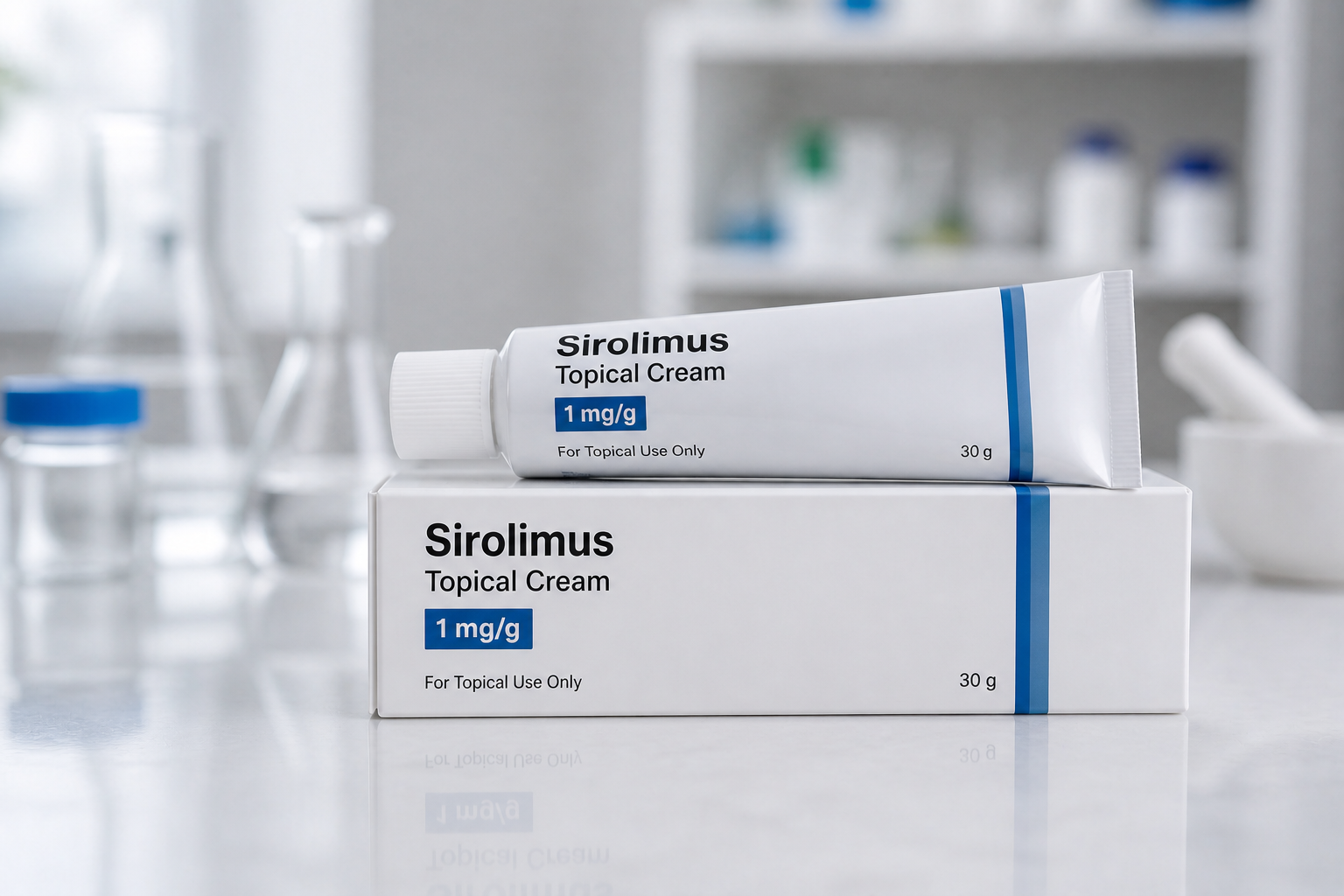
If you or a loved one has been diagnosed with a rare skin condition like tuberous sclerosis complex (TSC) or facial angiofibromas, you know how challenging it can be to find effective treatment options. These conditions don’t respond well to standard skincare products or conventional dermatological treatments. You’ve probably searched extensively for solutions, only to find limited options available. That’s where sirolimus topical cream comes in—an advanced, targeted treatment that’s changing outcomes for patients with these complex skin conditions.
Sirolimus represents a breakthrough in dermatological treatment, offering hope to patients who’ve struggled to find effective solutions. If you’re considering this treatment or want to understand more about how it works, this comprehensive guide will help you navigate your options.
Rare skin conditions like tuberous sclerosis complex and facial angiofibromas are fundamentally different from common skin problems. They’re not caused by bacteria, fungi, or simple inflammation—they involve abnormal cell growth and proliferation that standard creams and treatments simply can’t address.
Facial angiofibromas, for example, are benign but disfiguring skin growths that commonly appear in patients with tuberous sclerosis. These aren’t just cosmetic concerns—they can significantly impact quality of life, self-esteem, and social functioning. Traditional treatments like topical steroids or retinoids provide minimal benefit because they don’t address the underlying mechanism driving the abnormal cell growth.
This is why finding an effective treatment is so important, and why sirolimus represents such a significant advancement.
Sirolimus, also known as rapamycin, is a medication that’s been used for decades in organ transplant patients to prevent rejection. It works by suppressing the immune system and regulating cell growth. When compounded into a topical cream formulation, it offers a completely different application—treating specific skin conditions by targeting the cellular mechanisms that drive abnormal growth.
In the United States, sirolimus topical cream is commonly prescribed for:
The key advantage of sirolimus is that it addresses the root cause of these conditions rather than just managing symptoms.
Understanding how sirolimus works helps explain why it’s so effective for these specific conditions. The mechanism is elegant and targeted:
Sirolimus works by inhibiting a protein called mTOR (mammalian target of rapamycin), which plays a crucial role in cell growth and proliferation. In patients with conditions like tuberous sclerosis, the mTOR pathway is abnormally activated, leading to excessive cell growth and the formation of lesions. By blocking this pathway, sirolimus essentially “turns off” the signal that’s driving the abnormal growth.
This targeted approach leads to:
Unlike generic skincare products, sirolimus is specifically designed to address the cellular mechanisms driving rare skin conditions. It’s highly effective for conditions like facial angiofibromas linked to tuberous sclerosis, where standard treatments have failed. This targeted approach means you’re not wasting time on ineffective treatments—you’re using medication specifically designed for your condition.
One of the major advantages of topical sirolimus is that it minimizes systemic exposure compared to oral medications. When you take sirolimus orally (as transplant patients do), it affects your entire body and requires careful monitoring. Topical application delivers the medication directly to the affected skin with minimal absorption into the bloodstream, significantly reducing the risk of systemic side effects while maintaining local effectiveness.
Patients using sirolimus topical cream report significant improvements in the appearance of their skin lesions. Angiofibromas become smaller, less red, and less noticeable. This improvement in appearance can have profound effects on quality of life, self-esteem, and social confidence, particularly for patients who’ve been self-conscious about their skin.
Sirolimus topical cream isn’t available as a standard commercial product. It’s only available through compounding pharmacies, which means your formulation is customized specifically for you. Your pharmacist can adjust the concentration, base formulation, and other components to optimize effectiveness for your specific skin condition and needs.
Sirolimus topical cream is not widely available as a commercial product, which is why compounding pharmacies play such a critical role in making this treatment accessible. Compounding pharmacies can:
Getting the best results from sirolimus requires proper application and consistency. Here are the key guidelines:
While individual responses vary, here’s what many patients experience:
Results vary based on the severity of your condition, the concentration of sirolimus used, and individual factors. Your healthcare provider will monitor your progress and may adjust the treatment plan as needed.
Safety is a legitimate concern when considering any medication, especially for rare conditions. The good news: when used under medical supervision, sirolimus topical cream is generally safe and well-tolerated.
Possible side effects are typically mild and localized to the application site:
These side effects are typically mild and often improve with continued use as your skin adjusts. Serious side effects are rare with topical application. Regular monitoring by your healthcare provider ensures safe and effective treatment.
Sirolimus topical cream is particularly beneficial for:
Sirolimus topical cream represents a significant advancement in the treatment of rare and complex skin conditions. For patients with tuberous sclerosis complex, facial angiofibromas, and other rare dermatological conditions, it offers targeted, effective treatment that addresses the underlying cellular mechanisms driving these conditions.
With customized compounding available through qualified pharmacies across the United States, you can access treatment specifically tailored to your needs and supervised by healthcare professionals. If you have a rare skin condition and haven’t found effective treatment options, talk to your dermatologist about whether sirolimus topical cream might be right for you. For many patients, it’s been a life-changing treatment that finally provides the relief and improvement they’ve been seeking.
Sirolimus topical cream treats rare skin conditions, particularly facial angiofibromas and skin lesions associated with tuberous sclerosis complex (TSC). It works by inhibiting the mTOR protein that drives abnormal cell growth. The cream reduces lesion size, redness, and appearance while providing targeted treatment with minimal systemic side effects compared to oral medications.
Yes, sirolimus topical cream is available throughout the United States, but only through compounding pharmacies with a valid prescription from a dermatologist or healthcare provider. It’s not sold as a commercial product, which is why compounding pharmacies are essential for making this treatment accessible. Your healthcare provider evaluates your condition and prescribes the appropriate formulation.
Results vary depending on your specific condition and severity. Most patients notice gradual improvements over weeks to months of consistent use. Initial changes like reduced redness may appear within 4-8 weeks. More significant improvements in lesion size and appearance typically occur after 2-3 months of regular application. Patience and consistency are essential for optimal results.
Yes, sirolimus topical cream can be safely used long-term under medical supervision. Because it’s applied topically with minimal systemic absorption, it has a favorable safety profile for extended use. Regular monitoring by your healthcare provider ensures continued safety and effectiveness. Side effects are typically mild and localized to the application site.
Yes, sirolimus topical cream requires a prescription from a licensed healthcare provider. Your dermatologist evaluates your condition, confirms the diagnosis, and prescribes the appropriate sirolimus formulation customized to your specific needs and skin condition.
Sirolimus topical cream is generally well-tolerated with mild side effects. Common effects include mild skin irritation, temporary dryness or redness at the application site, and increased sensitivity. These effects are typically localized and often improve with continued use as your skin adjusts. Serious side effects are rare with topical application.
The FDA does not review any compounded drugs to evaluate their safety, effectiveness, or quality before they reach patients.