0
$0.00
Mini Cart
Empty cart
No products in the cart.

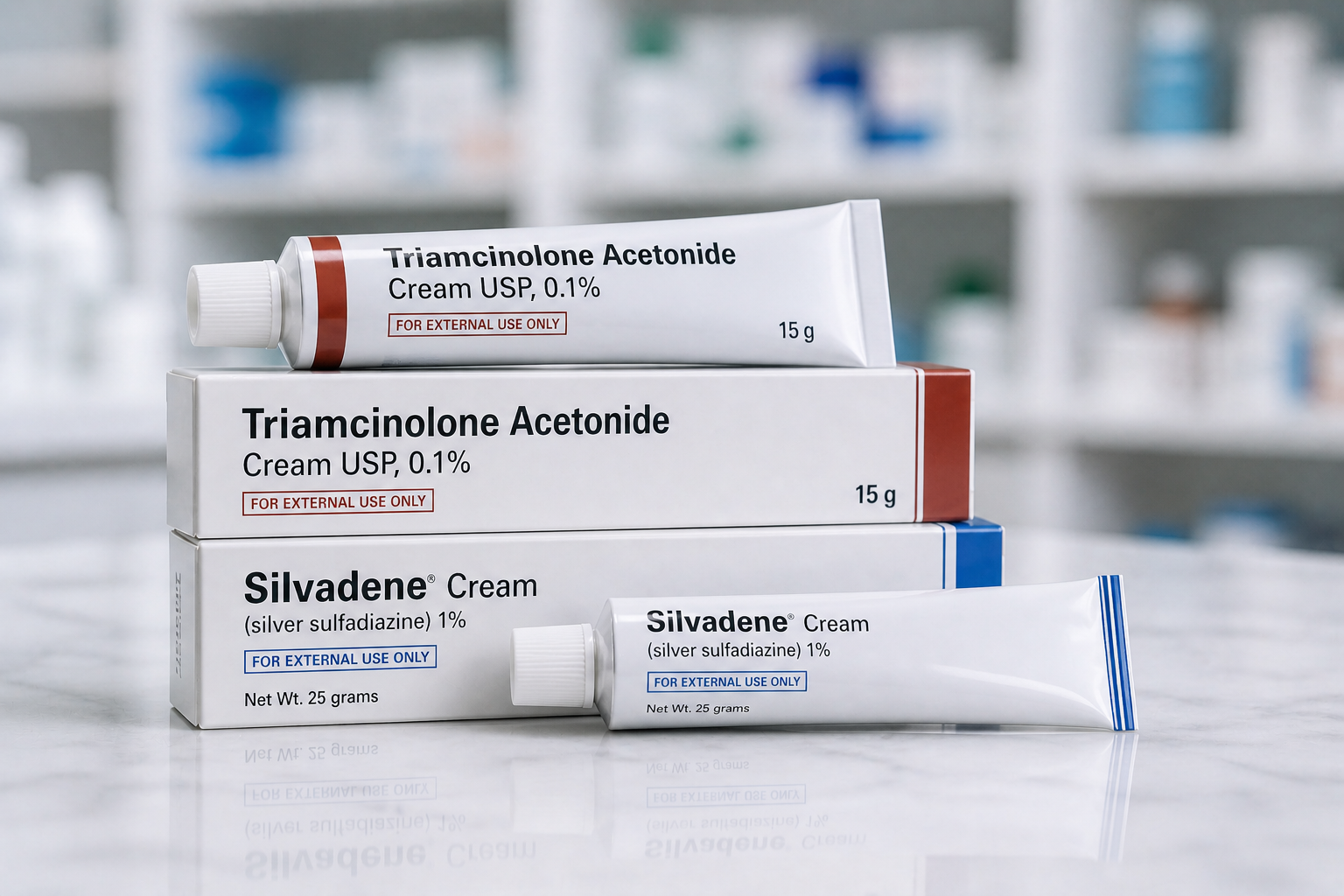
Whether you’re dealing with a painful burn, a stubborn skin condition like eczema, or a wound that won’t heal properly, finding the right treatment can make all the difference in your recovery. Two medications that have been helping patients across the United States manage these types of skin problems are triamcinolone and silvadene cream. While they serve different purposes, both play important roles in dermatology and wound care.
If you’ve been prescribed one or both of these medications, or if you’re trying to understand your treatment options, this comprehensive guide will help you understand how they work, when they’re used, and what to expect.
Skin problems range from inflammatory conditions like eczema and psoriasis to acute injuries like burns and wounds. Each type of problem requires a different approach. Inflammatory skin conditions need medications that reduce inflammation and calm the immune response. Burns and wounds, on the other hand, need protection from infection and support for healing.
This is why having multiple treatment options available is so important. One medication can’t address all skin problems—you need targeted treatments designed for specific conditions.
Triamcinolone is a topical corticosteroid—a medication that reduces inflammation, redness, itching, and swelling caused by various skin conditions. It works by suppressing the immune system’s inflammatory response in the affected area, providing relief from uncomfortable symptoms and allowing the skin to heal.
In the United States, triamcinolone is commonly prescribed for:
Triamcinolone comes in different strengths, allowing healthcare providers to prescribe the appropriate potency for your specific condition.
Silvadene cream, also known as silver sulfadiazine, is an antimicrobial medication used to prevent and treat infections in burn wounds and other injuries. It contains silver, which has powerful antibacterial properties that kill bacteria and prevent infection from developing.
In the United States, silvadene is widely used for:
Silvadene is particularly valuable in burn care because it provides broad-spectrum antimicrobial coverage while promoting healing.
While both are topical medications used for skin problems, triamcinolone and silvadene serve very different purposes:
Because they work differently, they may be used separately or, in some cases, as part of a comprehensive treatment plan. However, they’re typically not applied to the same area at the same time unless specifically directed by your healthcare provider.
Triamcinolone works by suppressing the inflammatory response in your skin. When you have eczema, dermatitis, or an allergic reaction, your immune system overreacts, causing inflammation, redness, itching, and swelling. Triamcinolone dampens this immune response, reducing inflammation and providing relief.
The medication works by:
Silvadene works through a different mechanism—it kills bacteria and prevents infection. The silver in the cream has powerful antimicrobial properties that are effective against a broad range of bacteria commonly found in wounds and burns.
The medication works by:
For patients with inflammatory skin conditions, triamcinolone provides significant relief. The itching that keeps you awake at night decreases, the redness fades, and the swelling improves. This relief allows you to focus on healing rather than being consumed by discomfort.
For burn and wound patients, silvadene is invaluable. By preventing bacterial infection, it allows wounds to heal without the complications that infections cause. This is particularly important for serious burns, where infection can lead to sepsis and life-threatening complications.
Whether you’re using triamcinolone to reduce inflammation or silvadene to prevent infection, proper use of these medications supports faster, more effective healing. By addressing the underlying problem—inflammation or infection—these medications allow your body’s natural healing processes to work optimally.
Both triamcinolone and silvadene are established treatments prescribed by healthcare providers across the United States. They have decades of clinical use and proven effectiveness, making them trusted options for managing skin conditions and burns.
Getting the best results from triamcinolone requires proper application:
Proper application of silvadene is crucial for infection prevention:
In some cases, healthcare providers may recommend using both triamcinolone and silvadene as part of a comprehensive treatment plan. However, they’re typically not applied to the same area at the same time. Instead, they might be used on different areas or at different times of day.
For example, a patient with a burn that’s also showing signs of inflammation might use silvadene during the day for infection prevention and triamcinolone in the evening for inflammation control. However, always follow your healthcare provider’s specific instructions—never combine treatments without medical guidance.
Most side effects are mild and manageable. However, if you experience severe reactions or side effects that don’t improve, contact your healthcare provider immediately.
These medications are suitable for:
Before using triamcinolone or silvadene, inform your healthcare provider if you:
Results vary depending on your condition and the medication used:
Triamcinolone and silvadene cream are essential treatments for managing different types of skin problems in the United States. Triamcinolone addresses inflammatory skin conditions by reducing inflammation and providing relief from itching and discomfort. Silvadene protects burns and wounds from infection, allowing them to heal properly.
If you’ve been prescribed one or both of these medications, follow your healthcare provider’s instructions carefully. Use them as directed, report any side effects or concerns, and attend follow-up appointments to monitor your progress. For many patients, these medications have been transformative, providing relief from painful conditions and supporting faster, more effective healing.
Triamcinolone is a topical corticosteroid used to treat inflammation, redness, itching, and swelling in various skin conditions. It’s commonly prescribed for eczema, dermatitis, psoriasis, and allergic skin reactions. The medication works by suppressing the immune system’s inflammatory response, providing rapid relief from uncomfortable symptoms and allowing the skin to heal properly.
Silvadene (silver sulfadiazine) is an antimicrobial cream used to prevent and treat infections in burn wounds and other injuries. It contains silver, which has powerful antibacterial properties that kill bacteria and prevent infection from developing. Silvadene is particularly valuable for second- and third-degree burns and other wounds requiring infection prevention.
Only use both medications together if specifically directed by your healthcare provider. While they serve different purposes, they’re typically not applied to the same area at the same time. Your doctor may recommend using them in different areas or at different times of day as part of a comprehensive treatment plan.
Yes, silvadene is commonly used for burn treatment and is considered safe when applied under medical supervision. It’s particularly effective for second- and third-degree burns, where infection prevention is critical. Always follow your healthcare provider’s instructions for application and wound care.
Yes, both triamcinolone and silvadene require a prescription in the United States. Your healthcare provider evaluates your condition and prescribes the appropriate medication and strength based on your specific needs and medical history.
Triamcinolone typically shows results within 2-3 days, with more significant improvement within 1-2 weeks. Silvadene begins protecting against infection immediately upon application, with visible wound improvement occurring over days to weeks as healing progresses without infection complications.
The FDA does not review any compounded drugs to evaluate their safety, effectiveness, or quality before they reach patients.