0
$0.00
Mini Cart
Empty cart
No products in the cart.

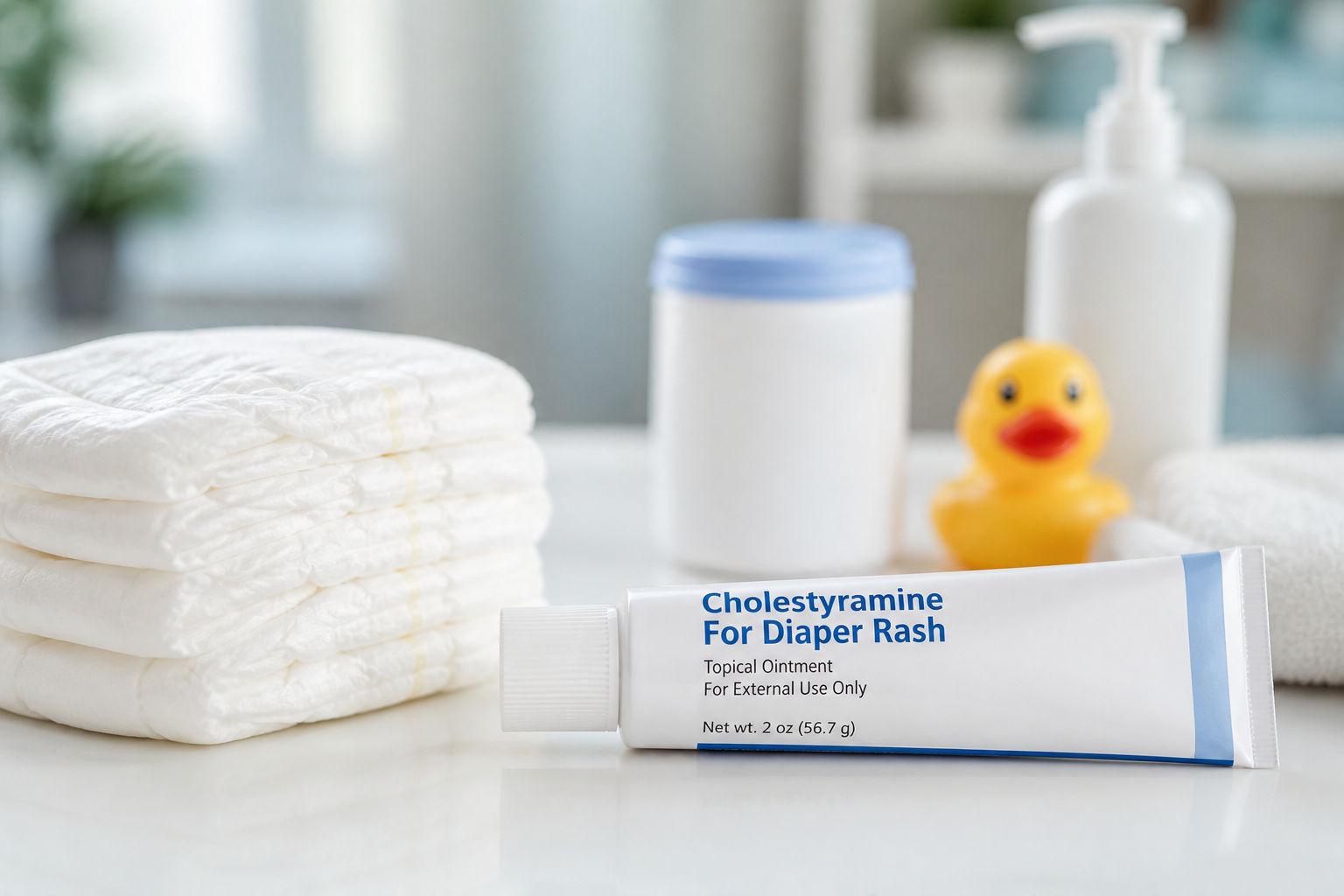
If you’re a parent dealing with a severe diaper rash that won’t go away, you know how frustrating and heartbreaking it can be. Your baby is uncomfortable, you’ve tried every over-the-counter cream on the shelf, and nothing seems to work. You’re not alone—and there’s a solution you may not have heard about yet.
Enter cholestyramine for diaper rash, a specialized treatment available through compounding pharmacies across the United States. While it might sound like an unusual approach, this medication has proven remarkably effective for severe, persistent diaper rash—especially when standard treatments fail. Let’s explore what it is, how it works, and whether it might be the answer you’ve been searching for.
Most diaper rashes are caused by moisture, friction, and bacterial or yeast overgrowth. These typically respond well to standard zinc oxide creams and good diaper hygiene. But some babies develop a different type of rash—one that’s caused by bile acid irritation in their stool.
This happens more commonly in infants with digestive issues, frequent diarrhea, or certain metabolic conditions. When bile acids come into contact with delicate skin repeatedly, they cause a particularly stubborn, painful rash that regular diaper creams simply can’t address. This is where cholestyramine comes in.
You might recognize cholestyramine as a medication used to lower cholesterol in adults. But when compounded into a topical ointment by specialized pharmacies, it serves an entirely different—and remarkably effective—purpose for diaper rash.
Here’s the science: cholestyramine is a resin that binds to bile acids. When applied topically to your baby’s skin, it works by:
This targeted approach addresses the root cause of the problem rather than just masking symptoms. That’s why it’s so effective for cases where standard creams have failed.
Cholestyramine ointment isn’t a first-line treatment—it’s reserved for specific situations where standard approaches haven’t worked. Your pediatrician might recommend compounded cholestyramine when:
If your baby fits any of these descriptions, it’s worth discussing cholestyramine with your pediatrician.
Unlike regular diaper creams that create a moisture barrier, cholestyramine actually addresses what’s causing the problem. If bile acids are the culprit, this treatment neutralizes them directly. This is why it works so well for cases where other treatments have failed.
Parents report seeing noticeable improvement within days of starting cholestyramine treatment. The redness decreases, your baby seems more comfortable, and the constant crying during diaper changes finally stops. That relief—for both you and your baby—is invaluable.
Cholestyramine ointment forms a protective barrier while actively neutralizing irritants. This dual action means your baby’s skin is both protected from further damage and given the chance to heal underneath.
When compounded by a specialized pharmacy, cholestyramine can be combined with other soothing ingredients like calendula, aloe, or zinc oxide to enhance effectiveness and provide additional comfort. The formulation is tailored specifically to your baby’s situation.
You won’t find cholestyramine for diaper rash at your local drugstore. It’s only available through compounding pharmacies—specialized pharmacies that create customized medications based on prescriptions from healthcare providers.
This is actually a significant advantage. Compounding pharmacies can:
Getting the best results from cholestyramine requires proper application. Here’s what you need to do:
Most parents see improvement within 3-5 days of starting treatment, with significant healing within 1-2 weeks.
This is the question every parent asks, and it’s the right one to ask. The good news: when properly compounded and used as directed, cholestyramine ointment is considered safe for infants.
However, safety depends on several factors:
Always consult with your pediatrician before starting any new treatment, and report any unusual reactions or concerns immediately.
Every baby is different, but here’s what many parents experience:
If you don’t see improvement within a week, contact your pediatrician. They may need to adjust the formulation or investigate other potential causes.
Once your baby’s rash has healed, you’ll want to prevent it from returning. If your baby is prone to bile acid-related rash, your pediatrician might recommend:
Severe, persistent diaper rash can be incredibly frustrating for parents and uncomfortable for babies. When standard treatments fail, cholestyramine offers a targeted, effective solution—especially for rashes caused by bile acid irritation. Available through compounding pharmacies across the United States, this customized treatment provides relief when you need it most.
If your baby has been struggling with a stubborn rash, don’t give up. Talk to your pediatrician about whether compounded cholestyramine might be the answer. Many parents have found it to be a game-changer, finally providing the relief their babies deserve.
Cholestyramine is specifically used to treat severe, persistent diaper rash caused by bile acid irritation in your baby’s stool. Unlike standard diaper creams that create a moisture barrier, cholestyramine actively binds to bile acids and neutralizes them, addressing the root cause of the problem. It’s particularly effective for babies with frequent diarrhea or digestive issues that contribute to stubborn rash that won’t respond to conventional treatments.
Yes, cholestyramine ointment for diaper rash is available throughout the United States, but only through compounding pharmacies with a valid prescription from your pediatrician. You won’t find it in regular drugstores because it’s a customized pharmaceutical formulation. Your doctor evaluates your baby’s condition and prescribes the appropriate strength and formulation tailored to your infant’s specific needs.
Many parents notice visible improvement within 3-5 days of consistent application. You’ll typically see decreased redness and inflammation, and your baby will seem more comfortable during diaper changes. Significant healing usually occurs within 1-2 weeks of regular use. However, results vary depending on the severity of the rash and how consistently you apply the treatment as directed.
Only use cholestyramine in combination with other products if specifically recommended by your pediatrician or compounding pharmacist. Mixing treatments without professional guidance could reduce effectiveness or cause unexpected reactions. Your healthcare provider will advise whether additional products are beneficial or if cholestyramine alone is the best approach for your baby’s situation.
Cholestyramine can be safe for infants when properly prescribed and compounded by a qualified pharmacy under medical supervision. Safety depends on correct formulation, appropriate strength for your baby’s age and weight, and following your pediatrician’s application instructions precisely. Always consult your pediatrician before starting treatment and report any unusual reactions immediately.
Clean and gently dry the affected area with warm water and a soft cloth. Apply a thin layer of the compounded ointment with each diaper change or as directed by your pediatrician. Avoid rubbing—pat the area dry instead. Use loose-fitting diapers to reduce friction and allow air circulation. Consistency is key, so follow the prescribed application schedule for best results and faster healing.
The FDA does not review any compounded drugs to evaluate their safety, effectiveness, or quality before they reach patients.